At 43, Her Period Still Came—So She Never Suspected the Transition Already Changing Her Desire

I was 43. My period was still arriving. Sometimes two days late, sometimes four days early—but it always showed up.
So when I started waking at 3:07 in the morning, feeling irritated by touch, and quietly avoiding sex with a partner I still loved, I blamed everything except perimenopause.
Work was busy. The kids needed me. My phone never stopped. Of course I was tired.
That explanation worked for a while.
Then “a while” became most of a year.
I could still run meetings, remember birthdays, plan vacations, and make everyone believe I was completely fine. But by nine at night, affectionate touch felt like another request somebody needed me to answer.
The confusing part was that it was not consistent. One weekend I would feel warm, affectionate, almost like myself. The next three weeks, absolutely nothing.
It was inconsistent enough to make me doubt myself—and consistent enough to change my relationship.
THE NIGHT I STOPPED CALLING IT “JUST STRESS”
My husband booked the restaurant. I bought the dress. The babysitter arrived on time.
I wanted a good night. I wanted to want everything that might come after it.
But halfway through dinner, I realized I was already rehearsing how tired I felt.
Not because I had stopped loving him.
Not because I wanted somebody else.
Because somewhere between “that sounds nice” in my head and actually feeling desire in my body, the message simply disappeared.
“The scariest part was not that we were fighting. It was that neither of us wanted to bring it up anymore.”
He stopped initiating because rejection hurt. I stopped feeling pressured because he stopped asking. For a few weeks, that felt like relief.
Then it felt like distance.
THE PATTERN I COULDN'T UNSEE
I began writing down what was happening—not in a wellness journal, just in the Notes app on my phone at 3 a.m.
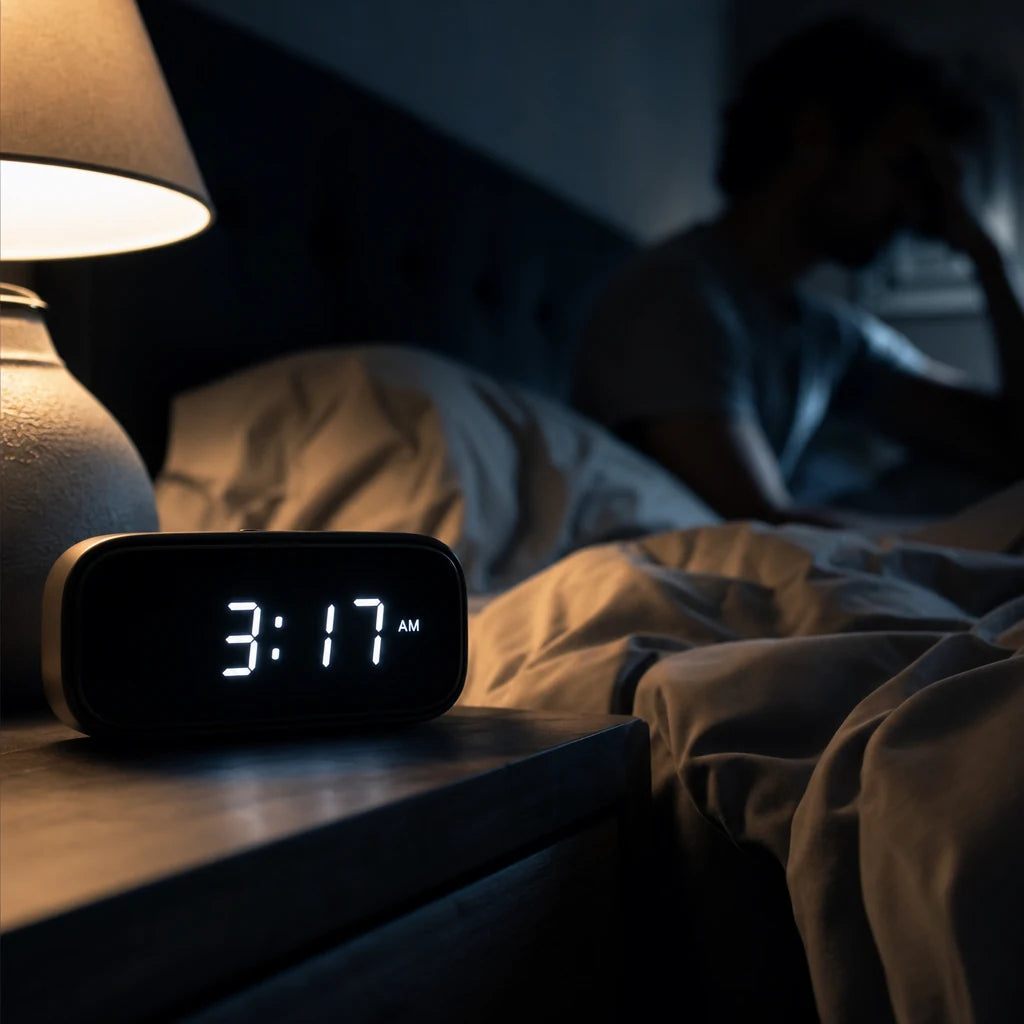
That last line was the clue.
I was using my period as proof that the transition could not have started. But perimenopause is the transition before menopause. Periods often continue while sleep, mood, comfort, arousal, and desire begin changing.
WHAT A CLINICIAN WOULD WANT TO KNOW
A useful evaluation is bigger than one symptom and more honest than one label.
A clinician may ask about sleep, medication, mood, pain, vaginal dryness, cycle changes, thyroid symptoms, blood pressure, relationship context, pregnancy possibility, and what “low desire” actually feels like for you.
That matters because different problems need different tools.
No single option replaces a complete perimenopause evaluation.
THE THREE PARTS I HAD BEEN TREATING AS ONE
For years, I had used one word—“libido”—for three experiences that did not always move together:
DESIRE
The brain-level feeling of interest or pull.
CONNECTION + PLEASURE
Whether touch carries emotional charge or feels neutral.
PHYSICAL RESPONSE
Whether the body follows when the mind is open to intimacy.
Those signals can be influenced by many things. The important realization was that loving my partner did not guarantee all three would arrive on schedule.

WHERE BLYS FITS—AND WHERE IT DOESN'T
Blys is not a treatment for perimenopause itself. It is a compounded prescription rapid-dissolve tablet that a licensed clinician may consider for appropriate patients experiencing changes in sexual response.
Its three ingredients are discussed in relation to three pathways: PT-141 for desire, oxytocin for connection and pleasure, and tadalafil for blood-flow support.

One clinician-reviewed conversation about three parts of response.
Prescription required. Approval is selective. The compounded combination is not FDA approved.
The private assessment asks about medications, cardiovascular health, blood pressure, pregnancy, symptoms, and other safety factors before a clinician decides whether Blys may be appropriate.
SEE IF A CLINICIAN SAYS BLYS MAY FIT →Private 2-minute assessment · prescription required · not everyone qualifies
WHAT WOMEN DESCRIBE IN THEIR OWN WORDS
Customer experiences vary. But the language women use is often less about becoming somebody new and more about recognizing themselves again.
Customer story · Individual experience, not a guarantee of results.


WHAT A WOMEN'S HEALTH SPECIALIST SAYS

“Most treatments for female sexual dysfunction only address one piece of the puzzle, either desire or blood flow or hormones. What makes this formulation remarkable is that it addresses the complete physiological cascade: brain chemistry, emotional bonding, and physical response.”
Dr. Sarah Bennette, MDOB-GYN & Women's Health SpecialistIF YOUR PERIOD STILL COMES—BUT YOUR DESIRE DOESN'T FEEL LIKE YOURS
You are not too young to ask what changed.
You are not imagining the inconsistency.
And you do not have to decide for yourself whether perimenopause, sleep, medication, hormones, pain, relationship pressure, or something else is contributing.
The next step is not guessing. It is giving a qualified clinician the complete story.
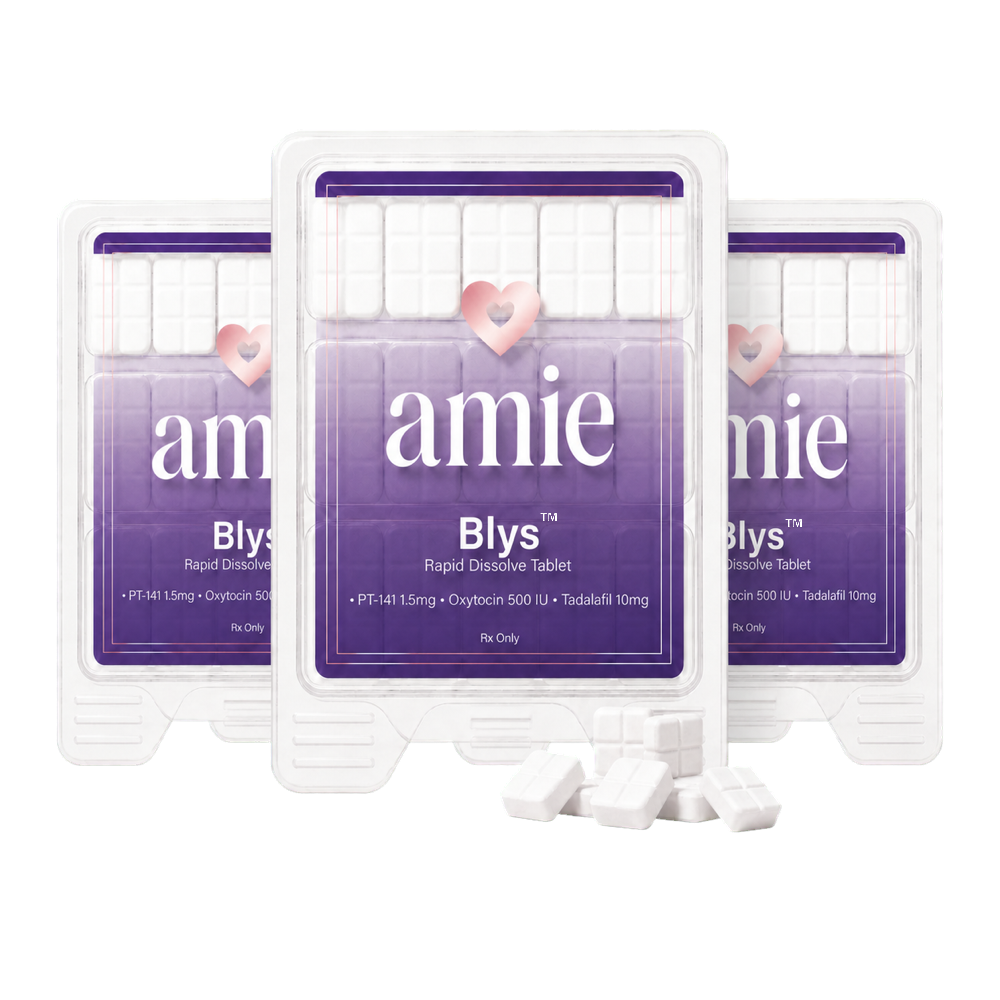
See whether Blys may fit this part of your health story.
Plans start at $99/month for 10 on-demand doses—about $3.30 a day.
Less than the coffee you buy after another 3 a.m. wake-up.
START THE PRIVATE ASSESSMENT Prescription required · licensed clinician review · not everyone qualifies · discreet fulfillment if prescribedIMPORTANT SAFETY AND PRODUCT INFORMATION
Blys is a compounded prescription medication. Compounded drugs are not FDA approved; FDA does not review them before marketing for safety, effectiveness, quality, or labeling. The individual ingredients may have FDA-approved uses in other products, doses, routes, or populations, but those approvals do not apply to this compounded combination.
Do not use tadalafil with nitrates or riociguat/Adempas. PT-141/bremelanotide can affect blood pressure and heart rate and may not be appropriate for people with uncontrolled hypertension or cardiovascular disease. Do not use during pregnancy, breastfeeding, or while actively trying to conceive unless specifically directed by a qualified clinician. Use only as prescribed. Seek urgent medical help for severe or concerning symptoms. Results vary.
Editorial disclaimer: This content is educational and promotional. It is not a diagnosis or substitute for medical advice. Discuss new symptoms, bleeding changes, pain, and treatment options with a qualified healthcare professional.